Winter tyre markings
Know your equipment
M + S (Mud and Snow):
Marking indicating that the tyre is, according to European rulings, a “snow” tyre but performances under winter conditions have not been subject to testing.
*Brake efficiency test under winter conditions according to the ETRTO (European Tyre and Rim Technical Organisation) method.
3 PMSF (3-Peak Mountain Snow Flake):
Tyres marked “3PMSF” are the only ones to guarantee real winter performance by being specifically designed for snow use and having fulfilled all of the requirements through objective testing*.
What do European regulations say about winter tyres?
European regulations on winter tyres indicate that “tyres must be marked M+S if they are snow tyres”.
No performance tests are required to display the M+S marking: this is merely a self-certification from the manufacturer. The marking does not imply any sort of objective performance guarantee.
Winter tyres that display the 3PMSF marking, however, must have passed a regulated test guaranteeing a certain level of performance in wintery conditions.
In Europe, the rules regarding the usage of certified winter tyres (M+S and/or 3PMSF)* vary from one country to another. Depending on the country, winter tyres may be required during a certain part of the year or in certain weather/driving conditions. In addition, some countries have legislation requiring a minimum tyre tread depth in wintertime.
See below for regulations by country.
Did you know?
In Europe, for tyres certified for winter (M+S and/or 3PMSF), the tyre speed rating can be slightly lower than that of the original tyres. In this case, your driving speed must be adjusted to match this lower speed rating.
A sticker with a reminder of the lowered maximum speed must then be placed inside the car in a place that is easily visible to the driver.
When should you change your tyres for the winter?
In the UK, there’s no requirement to fit winter tyres at a particular time of the year. However, it is safer to drive with winter or all season tyres in winter weather and these tyres become more effective below 7*C. To know when to change your summer tyres to winter tyres consider when the road becomes colder more regularly or there’s snow and ice. Remember this rule of thumb: “when the road temperature drops below 7*C, it’s time to put on your winter tyres!” another guide is to change to winter tyres at Halloween and summer tyres at Easter.
At temperatures below 7°C, summer tyres are less effective. The best solution is to use tyres certified for winter. These are designed for use in cold weather make it easier to control your vehicle on wet and snow-covered roads. Stopping distances for winter tyres are shorter in winter conditions and drivers can experience increased grip while driving on them, compared to summer tyres.
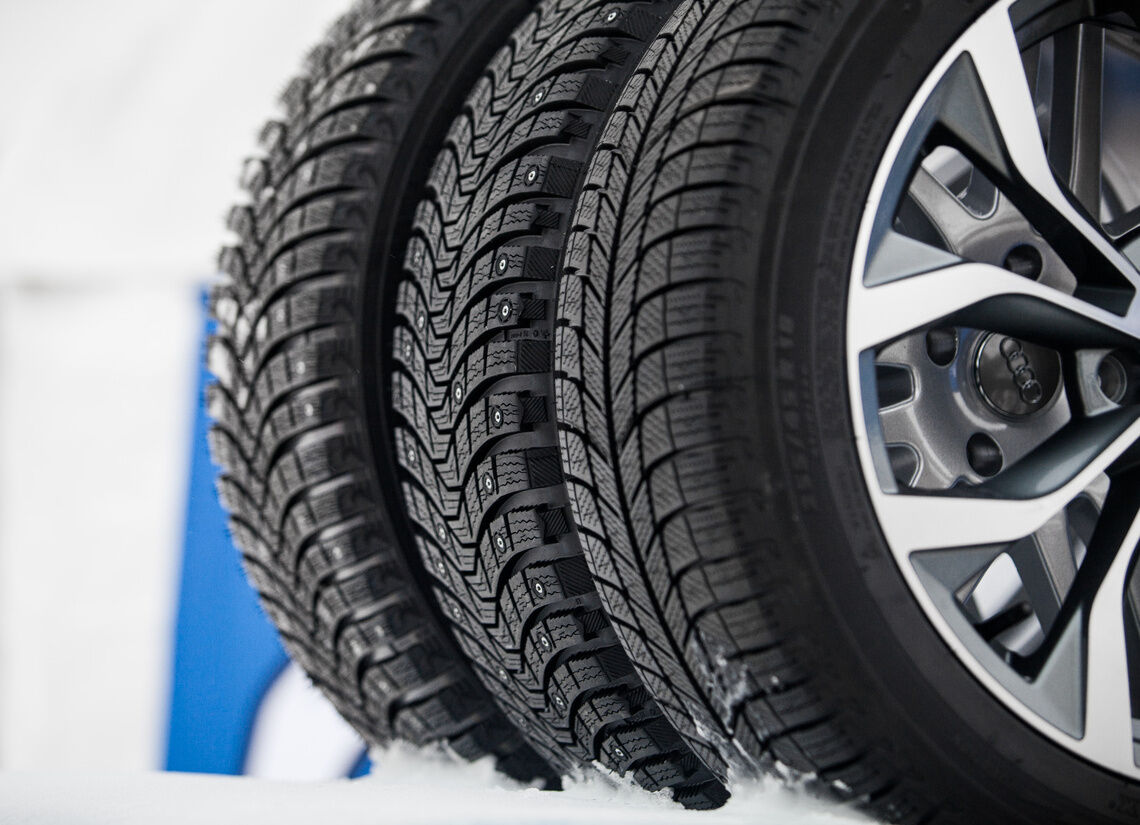
What about studded tyres?
Countries with winter tyre regulations
Winter tyres are required in some European countries at certain times of the year. In other places, such as the UK, winter tyres are optional. Given the amount of variation in the rules on snow tyres from one country to the next, we thought it would be useful to give a summary of the rules regarding the use of winter tyres by our closest European neighbours.
Always check the local regulation before travelling in Europe : the rules regarding the usage of winter tyres (M+S and/or 3PMSF markings) vary from one country to another. Depending on the country, winter tyres may be required during a certain part of the year or in certain weather conditions. In addition, some countries have a regulation requiring a minimum tyre tread depth in wintertime.
Did you know?
To find the manufacture date of your tyres, you must look at the DOT (Department of Transportation) code on the sidewall.
Summary
Navigating the regulations for winter tyres in Europe can be complex due to varying national laws. Understanding the markings like M+S and 3PMSF is crucial for selecting the right tyres. This guide provides a detailed overview of what each marking means, when to use winter tyres, and the specific requirements in different European countries.
See other related articles
-

Winter tyre or snow tyre: what is it?
What is a winter tyre? Is it different from a snow tyre?
Find out what you need to know about winter tyres and when it is advisable for your vehicle to be fitted with them.View more -
How to choose Winter Tyres
Are you looking to buy tyres for winter weather but don’t know how to choose among all the many tyre offers out there? Whether you need winter tyres or all season tyres, Michelin is here to guide you in your decision!View more -

Tyre Storage - How to store tyres
Need to store tyres? The experts at Michelin are here to provide a few tips on tyre storage to keep your tyres safe and ready to go during the off-season.View more
* Article 3.1.5 of the 92/93 directive as well as regulations R30 states as follows:
“Snow tyres must display the letters M + S“
“Snow tyre”: tyres whose tread pattern and structure are known for, above all, better behavior in mud and fresh or melting snow than standard road tyres. The tread design of snow tyres is generally distinguished by solid grooves and/or tread blocks, spaced wider apart than those on standard road tyres.