This guide will help you understand what adventure (ADV) tyres are and how to select the perfect set for your riding style, ensuring you're equipped for whatever the road or trail throws your way.
What Are ADV Tyres and Why Are They Different?
Adventure tyres are specifically designed for dual-sport and adventure motorcycles that tackle both paved roads and off-road terrain. Unlike standard road tyres, which prioritise grip and handling on tarmac, ADV tyres need to balance on-road performance with off-road capability.
The key difference lies in their construction and tread design. ADV tyres feature more aggressive tread patterns with deeper grooves and larger blocks than road tyres, providing better grip on loose surfaces like gravel, mud, and sand.
At the same time, they maintain enough contact area to provide stable handling and braking on paved roads. This versatility makes adventure motorcycle tyres essential for riders who refuse to limit their journeys to marked routes.
Key Factors to Consider When Choosing ADV Tyres
Terrain Ratio
Tread Pattern and Grip
Durability and Dual Compound Technology
Weather and Load Performance
Understanding Terrain Ratios and Their Importance
Terms like 100/0, 80/20, or 50/50 are commonly used, indicating the balance between on-road and off-road performance.
To make things simple, MICHELIN trail tyres can be grouped into three clear usage categories:
1. For riders who stay on the road (100/0 – 90/10)
Designed for maximum road performance, comfort, and longevity.
These tyres are ideal if your riding is almost entirely on tarmac, offering strong stability, wet‑weather grip and long-distance comfort.
2. For riders who want light off‑road ability (80/20 – 70/30)
These tyres are primarily road-oriented but capable of handling trails, gravel tracks, and unpaved sections when your route takes you off the beaten path.
These tyres are mainly road-focused, but with the versatility needed for light off‑road riding.
3. For riders seeking high off‑road performance (50/50 – 60/40) or even extreme off-road ability (30/70 – 20/80)
Built for riders who tackle challenging terrain, technical trails, or extended dirt sections.
MICHELIN Anakee Wild (fits into the high off-road 50/50 range)
These tyres feature more aggressive tread patterns to provide off-road traction and durability while remaining capable on the road when needed.
Exploring Tread Patterns and Their Impact on Performance
The tread pattern determines how your tyres interact with different surfaces. Aggressive patterns with large, widely spaced blocks provide excellent traction in mud, sand, and loose gravel by allowing the tread to dig in. However, this comes at the cost of increased road noise and potentially reduced stability on tarmac.
Milder tread patterns with tighter spacing offer quieter, more predictable road performance and better wet grip on paved surfaces. But they won't provide the same bite in challenging off-road conditions.
Understanding how ADV tyre patterns affect performance can help you match the tread to your terrain. Consider where you spend most of your time. If you're comparing specific models, our MICHELIN motorcycle tyre reviews provide detailed insights into real-world performance across a range of conditions.
The Role of Durability and Dual Compound Technology in ADV Tyres
Adventure riding is demanding, and your tyres need to withstand varied conditions without premature wear. Modern dual compound motorcycle tyres use different rubber compounds across the tread surface:
Harder compounds in the centre for longevity during highway cruising,
Softer compounds on the shoulders for grip during cornering.
This technology helps extend tyre life whilst maintaining performance, making it a worthwhile consideration for riders covering serious mileage. MICHELIN’s dual compound motorcycle tyres are engineered for longevity, delivering thousands of miles of reliable service across mixed terrain.
Weather and Load Considerations for Adventure Riding
Adventure motorcycles often carry substantial loads, luggage, camping gear, and passengers. Your tyres must maintain performance under these varying weights whilst coping with unpredictable weather conditions.
Look for tyres with strong wet-weather performance, particularly if you ride year-round in the changeable climate. Wide circumferential grooves help evacuate water and reduce the risk of aquaplaning, whilst silica-enhanced compounds maintain grip even in cold, damp conditions.
Temperature adaptability matters too. Tyres that perform well in some weather conditions might struggle in others.
Choosing Between Tubed and Tubeless Tyres
Tubeless tyres are standard on most modern adventure motorcycles, offering several advantages: they're easier to repair on the trail with plug kits, lose air slowly if punctured, and generally provide better heat dissipation.
However, tubed tyres remain popular for serious off-road riding. They're essential for spoked wheels, more resistant to impact damage from rocks and roots, and easier to repair in remote locations with basic tools.
For riders primarily using sealed roads with occasional off-road excursions, tubeless tyres offer the best balance of convenience and performance. If you're planning extensive off-road adventures, particularly in remote areas, the resilience of tubed tyres might be worth considering.
Types of ADV Tyres for Different Riding Styles
There are three main types of ADV tyres, each suiting different riding styles:
Road-biased ADV tyres suit touring-focused riders who occasionally venture onto unpaved roads. These tyres deliver excellent stability, fuel efficiency, and wet-weather grip on tarmac whilst handling light gravel and dirt tracks competently.
Balanced dual-sport tyres represent the sweet spot for many adventure riders. They offer genuine off-road capability without compromising on-road performance. These tyres handle motorway miles confidently whilst providing the traction needed for forest tracks, rocky paths, and mixed terrain.
Off-road-focused tyres are for riders who view tarmac as merely the connection between trails. With aggressive knobby patterns, these tyres excel in mud, sand, and technical terrain. They require more careful riding on paved roads – expect increased noise, reduced fuel economy, and less precise handling. But the trade-off is genuine off-road capability on challenging routes.
Maintenance Tips for ADV Tyres
Getting the most from your ADV tyres requires regular attention. Here's how to keep them in optimal condition:
Proper inflation is crucial. Check your off-road motorcycle tyre pressure regularly, adjusting it for load and terrain. Lower pressures can improve traction off-road, but should be restored for highway riding. Incorrect pressure accelerates wear and compromises handling. Your motorcycle's handbook and tyre sidewall suggest recommended pressures.
Regular inspection helps catch problems early. Look for embedded stones, cuts, or unusual wear patterns after each ride. Remove debris from tread grooves and check sidewalls for damage. Pay particular attention to wear indicators moulded into the tread – when these become flush with the surrounding rubber, replacement is necessary.
Replacement intervals depend on your riding style and terrain. Road-biased tyres typically last longer than aggressive off-road patterns. Track your mileage and inspect tread depth regularly.
Store your motorcycle properly during the winter months if you're not riding. Raise it on stands to prevent flat spots and keep tyres away from direct sunlight.
Choose Your Adventure
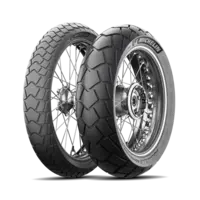
Michelin ANAKEE ADVENTURE 2
Turn everyday rides into new adventures.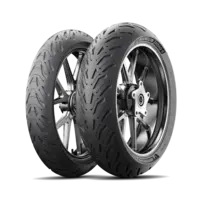
Michelin ROAD 6
The new must-have MICHELIN road tyre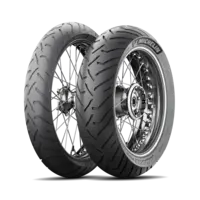
Michelin ANAKEE ROAD
On-road tyre specifically designed for trail motorcycles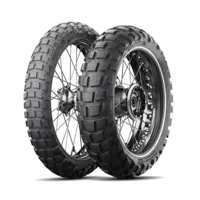
Michelin ANAKEE WILD
The most adventurous of our trail tyres


Everything you need to know about ADV tyres
Get answers to your questions!
FAQs about ADV tyres
Terrain ratio indicates the balance between on-road and off-road performance. An 80/20 tyre focuses primarily on road use (80%) with light off-road capability (20%), whilst a 50/50 tyre splits performance equally between both surfaces.
Aggressive patterns with large blocks provide excellent off-road traction but can be noisy and less stable on roads. Milder patterns offer better road performance but reduced off-road grip. Your tread pattern should match the conditions you ride in most frequently.
Off-road surfaces demand different tyre characteristics than paved roads. Specialised off-road tyres provide the traction, self-cleaning ability, and impact resistance needed for loose, uneven terrain, whilst standard road tyres would struggle or fail in these conditions.
Tubeless tyres are easier to repair and better for on-road use, while tubed tyres are suited for severe off-road conditions.
Dual compound technology uses different rubber compounds to enhance durability and grip, extending tyre life and performance.
Tread patterns affect how tyres interact with different surfaces, with aggressive patterns suited for off-road and milder patterns for on-road.
Consider the terrain ratio that matches your riding style, the tread pattern for your typical surfaces, and the durability needed for your adventures. Also, think about weather conditions and whether you need tubed or tubeless tyres.
Photos credits: (c)MICHELIN/Eric Malherbe -European Sport Communication