A vehicle’s tyre pressure warning light has evolved over time and takes different forms across makes and models. Regardless of how it appears, this important warning light is your car sending you a message to check your tyre pressure in one or more of your tyres.
The first step is always to stop your vehicle to check the air pressure and make sure your tyres are properly inflated. Refer to this Michelin article for a precise description of the process. You should never ignore this warning signal as driving on under-inflated tyres may put your safety at risk through reduced handling and performance.
If, however, your tyres are at the correct air pressure but the warning light is still activated, there are other steps you can take. Let’s take a closer look at how the tyre pressure warning light works to understand its role as a safety feature and what to do if it does not respond to correct air pressure.
Tyre pressure and safe driving
Prior to the 1980s, cars were not equipped with a tyre pressure warning light. However, concerns about safety and gas mileage led governments to start looking at ways to monitor tyre pressure. In response, some luxury car makers began equipping their vehicles with what came to be called the Tyre Pressure Monitoring System, TPMS for short. The system eventually became mandatory on all new vehicles, in the US in 2007 and then in Europe on November 1, 2014.
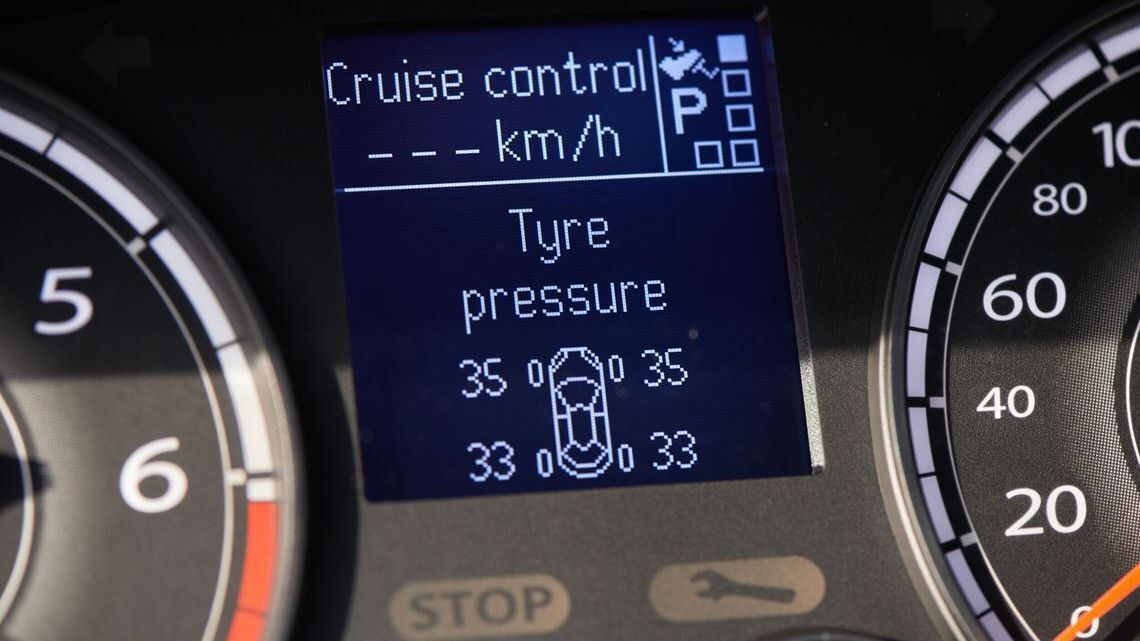
TPMS is meanwhile a common safety feature on all new vehicles, and with that has come increasing sophistication, including warning light designs that can even pinpoint which tyre needs air, especially on more recent or luxury models.
In a nutshell, the TPMS constantly monitors the pressure of all four tyres or any unequal speed rotation between the tyres and issues a warning to the driver if the pressure falls below a certain legally mandated threshold of 20%, approximately 0.4 bars (25% in the US).
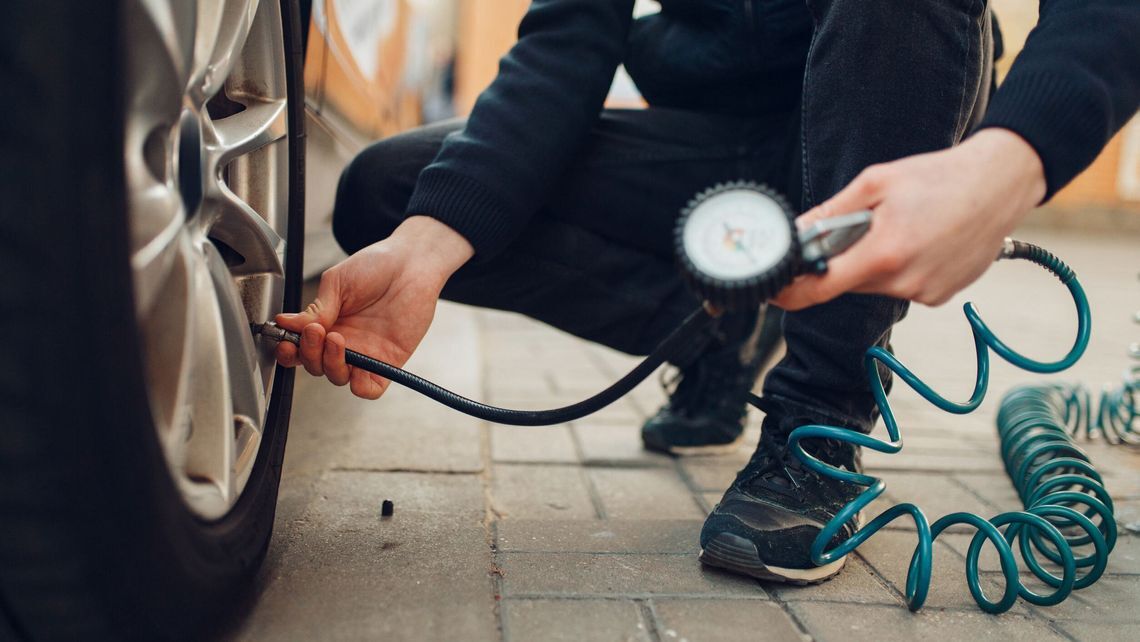
The simple solution is to immediately stop and check if the air pressure on all four tyres is correct. If the pressure is slightly below the car manufacturer’s recommendation (listed on the vehicle’s door placard or in the owner’s manual), you must readjust the pressure based on the recommendation (add 0.3 bars over the recommendation when the tyres are hot). The final pressure should be adjusted back to the manufacturer’s recommendation when the tyres are again cold.
Fully inflated tyres are a key to safe driving. Underinflated tyres can result in:
Poor handling, including the risk of aquaplaning on wet roads
Longer braking distance due to a loss of traction/grip
Risk of a tyre blowout
Premature and fast tyre wear
Reduced range because underinflated tyres increase rolling resistance, which consumes more fuel/energy
Understanding how the TPMS works
There are two types of TPMS systems, direct and indirect. Here are the salient features of each:
Indirect TPMS:
Developed in the first generation of TPMS, although still in use by many manufacturers
Relies on wheel speed sensors used by the anti-lock brake system (ABS) and compares relative wheel speeds to detect low air pressure
When a tyre loses air, its diameter decreases slightly, and it turns more quickly.
When the Indirect TPMS detects one wheel spinning faster than expected, it triggers the tyre pressure warning light.
Direct TPMS:
The newer technology, often found on more recent vehicles and luxury cars
Monitors air pressure in real-time through sensors fitted in each tyre air chamber and relays this information to the vehicle’s on-board computer
The TPMS illuminates a warning light when one of the sensors detects a loss of pressure in any of the tyres.
Identifies which specific tyre or tyres are under-inflated
Direct vs. indirect TPMS:
A direct TPMS provides more accurate tyre pressure readings as it measures the air pressure directly and identifies which tyre or tyres need to be adjusted.
Direct TPMS sensors can be damaged during tyre changes if they are incorrectly dismounted and are also subject to battery failure over time.
An indirect TPMS demands less frequent calibration, although it does require resetting after each tyre maintenance (tyre replacement or pressure adjustment).
An Indirect TPMS is less precise and might require some time before it detects under-inflated tyres.
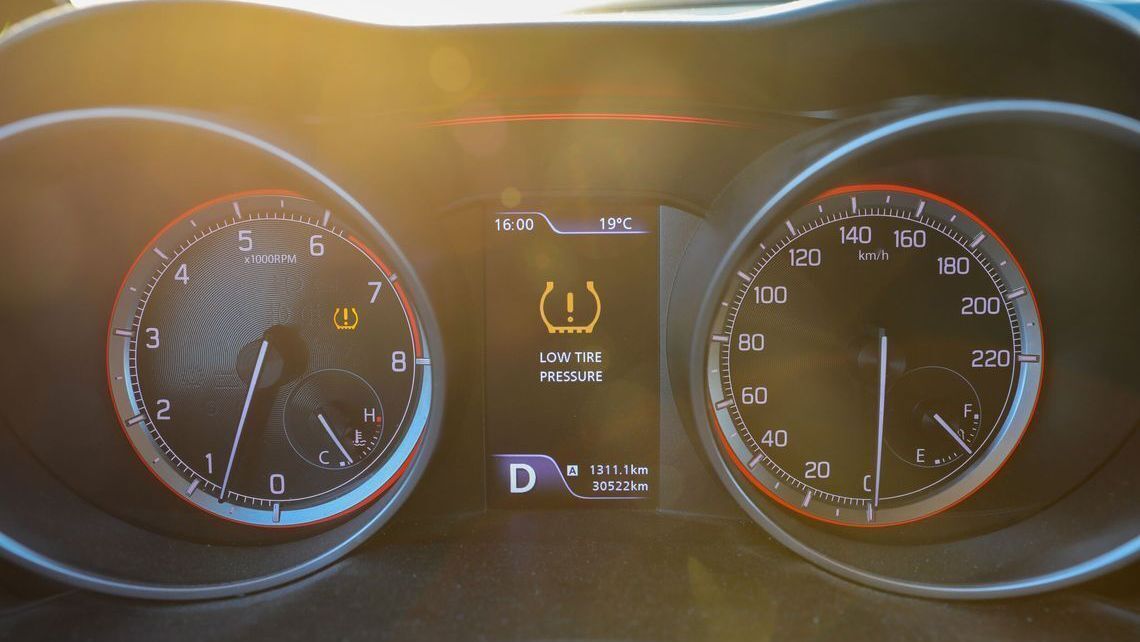
Whether your vehicle is equipped with a direct or indirect system, the TPMS should not be seen as a replacement for monthly manual tyre pressure checks. The TPMS system only issues a warning at the 20% threshold for low pressure. So if you are driving with, say 10% under-inflated tyres, the warning light will not necessarily activate. What is important to understand, however, is that driving on lower-than-recommended air pressure will shorten tread life, reduce fuel efficiency and end up costing you in the long run with more frequent tyre changes. This makes it essential to check your tyre pressure every month and not just wait for the tyre pressure warning light to activate as a signal to add air to your tyres.
Why is the light on?
When you start your vehicle, the tyre pressure warning light will light up briefly on many models as part of the ignition process. If the light stays illuminated, the first step is to immediately check the pressure on your tyres and add air if they are low. Ideally, the air pressure should be measured when the tyres are cold, or at least two hours after your last drive. Keep in mind that when the outside temperature starts dropping, the pressure of your tyres will decrease as well by around 0.2 bars and might trigger the warning light.
However, it is also possible that your TPMS is malfunctioning for a variety of reasons related to the system itself.
Sensors: Direct TPMS sensors can fail or suffer damage, which may cause the tyre pressure warning light to turn on, usually as a blinking light for a determined period of time depending on the car’s make and model. Something as simple as driving over a pothole can damage one of the sensors. Look for dents or any damage to the wheel hub as a possible indicator of a malfunctioning sensor. These same sensors can also be damaged during a tyre change if incorrect fitment procedures are used. If your sensor is working properly, you should be able to see the current tyre pressure on your dashboard in a direct system.
Battery failure is another reason the tyre pressure warning light may be blinking in a direct system. TPMS sensors are battery-powered, which have a limited lifespan and cannot be replaced. It is recommended that all four sensors be replaced if one battery fails in order to prevent any additional warning message in the future.
Tyre changes or maintenance: Depending on your car, your TPMS might need to be recalibrated after various tyre services, such as tyre rotation or a tyre change, especially to a different-sized tyre. This operation allows the vehicle to use the new tyre pressure as the new reference.
Snow tyres or spare tyres: Depending on the make and model, you will sometimes need to have a winter tyre set properly paired with the TPMS if your vehicle is equipped with a direct TPMS. Driving on a spare tyre may also trigger the air pressure warning light if the spare is not equipped with a sensor or is a different tyre size.
Whatever the reason for a blinking tyre pressure warning light, your mechanic or trained professionals are familiar with TPMS equipment and can run a diagnostic to get your TPMS properly working again.
How to turn off the tyre pressure warning light
If your TPMS is properly working, properly inflating your tyres will usually turn off the warning light as explained above. However, sometimes the warning light will still stay illuminated or blink even though the air pressure is correct. On some cars, you will need to do a manual reset to the system, especially if it is fitted with an indirect TPMS using ABS sensors.
There are a few actions you can take to remedy the situation, starting with referring to your owner’s manual. The TPMS on many vehicles has been designed with a reset procedure, which sometimes even involves a TPMS reset button. In other cases, driving your vehicle for 10 minutes or more at 80 km/h or above after inflating the tyres to the proper pressure may also deactivate the light the next time you start your car.
If these simple fixes do not turn off the warning light, it might mean your TPMS is malfunctioning for one of the reasons outlined above and needs new parts, repairs or a recalibration. There may be an issue with how your TPMS is communicating with the onboard vehicle computer and it needs to be reprogrammed. Or you could have a slow puncture that is difficult to detect. Most professional mechanics and garages are familiar with TPMS and can pinpoint the problem and make the right repairs or adjustments.
When it’s cold (or hot) outside
Besides low tyre pressure and TPMS sensor problems, there is another special category related to why your tyre pressure warning light might be illuminated. Cold temperatures outside will decrease the air pressure inside your tyres. The same applies to extreme heat, which can expand the air pressure in your tyres, although this scenario is less likely to trigger the warning light.
Tyre pressure is partly dependent on temperature and can decrease about 0.07 to 0.14 bars for every drop of 10°C. The air inside the tyre condenses, sometimes to the point that your TPMS will read this as under-inflated tyres and light up the warning indicator to prevent low tyre pressure situations.
Regardless of the temperature outside or in your garage, the pressure of your “cold” tyres must correspond to the car manufacturer’s recommendation. If the tyre pressure warning light activates during an extreme temperature drop, you will need to adjust the pressure to reach the car manufacturer’s recommendation immediately as low air pressure is a safety risk, especially in winter.
Properly inflated tyres improve performance and safety
Understanding your vehicle’s TPMS and maintaining the correct air pressure in your tyres is key to enhancing the driving experience of your vehicle and keeping you and your passengers safe. Regardless of their age and wear level, it is normal for your tyres to lose a small amount of air, which is why Michelin recommends checking the tyre pressure once a month.
Problems abound when you drive on underinflated tyres: poor handling, longer braking distance, an increased risk of aquaplaning in wet conditions or even a tyre blowout. Driving on underinflated tyres is also simply bad for your tyres as it might impact their overall lifespan (-0.5 bars can represent an 8,000 km decrease in lifespan). They will not wear as well because of uneven tread wear and ultimately require more frequent replacements. And then there’s the fact that low air in tyres increases their rolling resistance and reduces fuel efficiency, for both gas-powered vehicles and electric/hybrid vehicles running on batteries.
Explore the Michelin Tips and Advice page to learn more about tyre basics, maintenance, driving tips and more. Looking for the right tyre for your vehicle? Use our Tyre Selector to find the best tyre for your car. Or visit our Dealer Search to locate a Michelin dealer near you to help you make your selection.